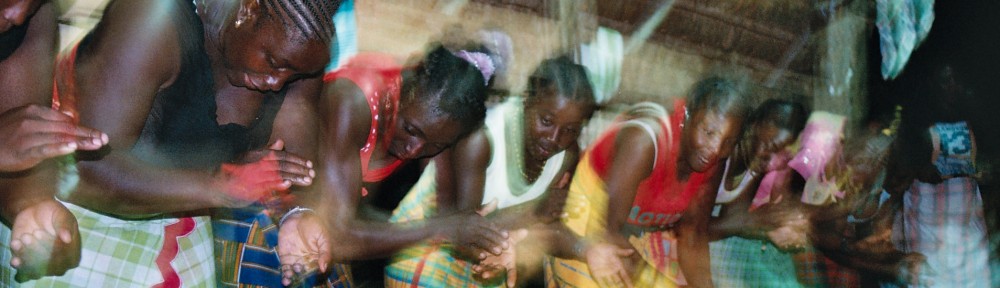
 Where do I begin? For those who are not familiar with Trinidad and Tobago’s Carnival, the two days prior to Ash Wednesday people from all over the world come together to celebrate life in every sense of the word. Starting from the 18th century, the French would have elaborate masquerade balls in Trinidad. Because the slaves were banned from such festivities, slaves would host their own mini-carnivals in their backyards. With the emancipation of slavery, these celebrations moved to the streets and since that time Trinidad Carnival is highly regarded as “The Greatest Show on Earth.” Carnival season begins from Christmas onwards, with many cultural events leading up to the street parade where you “play mas” on Carnival Monday and Tuesday, including j’ouvert. J’ouvert kicks off carnival Monday with crowds of people dancing covered in mud, oil and paint in the streets in remembrance of the emancipation of slavery. The english translation of j’ouvert is I open and the tradition of oil, paint and mud stems from the slaves not wanting to be recognized in such activity by former slave masters. So, with the history out of the way, now let me tell you what really goes down (or at least what went down Feb 20-21 2012).
I am obliged to say that this was my very first Trinidadian Carnival experience. Though I have participated in other carnivals, including Toronto’s Caribana, Montreal’s Carifiesta, Notting Hill in London, Labour Day parade in New York and DC Carnival, there was absolutely, positively nothing like THIS carnival experience. With only 2 hrs of sleep on Sunday morning, I was ready to jump up for d’original breakfast fete. It was literally the crack of dawn and yes, where I was staying, roosters where actually crowing. By 6am there was a sea of brown, yellow, white, black people eating, limin’ (chillin), whinin’ and drinking like fish in the ocean of fete. There was no bacon, eggs, pancakes or coffee, but rather there was jerk chicken, roti, doubles, and liquor. I never saw anything like it. People of all ages, sizes, from all over the world were gyrating from left to right to soca and chutney music in sweet, sweet T&T. With women rollin’ their bumpers, tipsy, teasin’ and pleasin’ all the men responding and often “rising” to the challenge. Sun beating down, soaking wet with sweat and everyone’s “head nice.” And then when you felt like the whining was done, there was more soca to come and the fetin’ went on and on. It’s now midday and time to cool down by either heading to the beach or taking a quick nap before the “Lara fete.” Sunday night, again scores of people were looking grown and sexy (in sandals, of course) on the grounds of the infamous cricketer, Brian Lara. Tickets are always hard to come by, but I was ready to dance the night away until j’ouvert morning.
Thousands descended on the streets of Port of Spain to play with their respective J’ouvert bands. The alcohol was flowing, flags and rags were in the air with everyone getting on bad, covered in a mixture of oil, mud, and paint placed on their entire body by strangers in the early morning breeze. No time to be tired after 6 hrs of j’ouvert – time to get in costume to play mas in your band of choice or spectate and enjoy the show cause “It’s Carnival.” The energy was palpable as persons playin’ mas cross de stage in their elaborately designed, yet revealing, costumes – dancing as if their lives depended on it. You could feel the beat of the drums from head to toe and there was a certain exhilaration in saying hi and bye to complete strangers with a common goal of having fun “chippin down de road” during the bacchanal. People say it’s a once in a lifetime experience, but I say it’s an annual one. There is no question where I will be next February. Like any good vacation, it is not cheap by any stretch of the imagination. Mas costumes start at $500 USD and inclusive fetes average between $100-200. Nonetheless, there are truly no words or pictures that can truly capture the spirit of Trinidad Carnival. So, I encourage you all to see it for yourself.
This month’s guest blogger is Charlisa Gibson. Bahamian by birth and well traveled by design, Charlie has lived in the US, the UK, Canada and the Caribbean. When she’s not wukkin up, she’s making the rounds – doing her medical residency in Washington, DC. She is also Nafeesah’s birthday twin, which clearly indicates that she is some kinda woman… watch out now!
 existabovethenoise