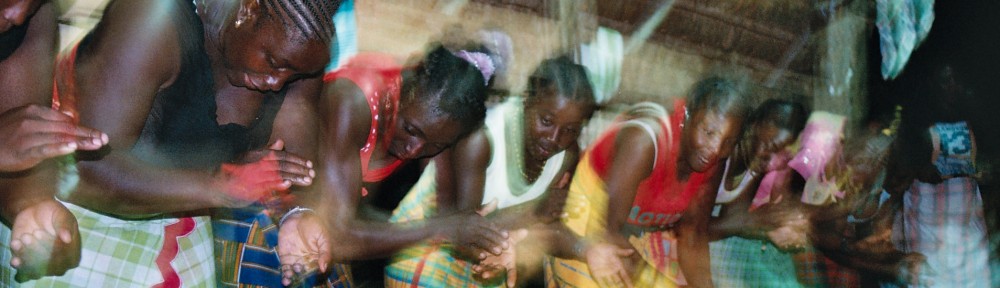
Woman wearing manly crown, so rare…

São Paulo (Sampa) is not known for carnival.  In fact, it’s not known for being much more than a bustling metropolis – the New York City of the Southern Cone.  It’s all business, all traffic, all urban spread and all urgency.  It is a far cry from the vision of Pão de Açúcar and Cristo on high that most people expect of Brasil.  There are implants and big butts among this 10,659,386, but the “for sale” sign doesn’t dangle from people’s necks quite like it does on the banks of Copacabana.  Sampa ain’t for you sleepers.  And since it’s always felt enough like home for me to settle in real sweet at night, I decided a good carnival fête was in order this year.

Escola de Samba Vai Vai originated in a neighborhood called Bixiga.  This neighborhood is centrally located to the chic parts of town, but it isn’t a member of the same score.  Vai Vai is an institution that serves much of the same purpose as a historically black college – sometimes quality fades, but legacy trumps all.  It’s been around since the 1930s, and it’s predecessor union dates back years before that.  It was established as a football club, turned samba school, turned social network organization that would support this predominantely Black neighborhood as it grew ever encroached upon, ever in self-denial, as the Brazilian eugenics movement encouraged European immigrants of all nations to whiten the country.  Attempts to make Blackness disappear in São Paulo, the cultural and financial capital of the nation, have left a strong legacy of reactionary Black militancy here.  But since racism in Brazil isn’t defined by rules of law, but by social taboos, it’s in the heart of social organizations where culture, identity and preservation live or die. The jury is still out on whether or not a samba school should have to hold up the weight of a world, but the coffee leaves (the slavery cash crop) in the regalia reminds the window shopping sambista that this school has a history.

This is only part of Vai Vai’s story. And Vai Vai’s story is only part of the carnival story. And the carnival story is only a sliver of São Paulo’s story, but this is what I walked into.  Perhaps years of visiting this place have left me with a keener understanding of why there are so many interracial couples. Why the theme of these schools will always be very “Black centric,” no matter how integrated the schools have become.  Why a Nigerian babalawô seems to be hovering behind the scenes while the Brazilian pai de santo glides through the crowd with his blinging ileke on showcase. There are Baianas and clowns, warriors and naked women, dieties and porta bandeiras – man, these people are too clever for the cachaça flowing through my river and the 45 minutes we have to walk through the samba drome.

The samba drome is a Brazilian phenomenon, I’m told. It’s where all the samba schools must go to be officially judged for the carnival contest. Each group only has 45 minutes to pass through and each school has their own scheduled time to make an appearance. Vai Vai’s was at 3am on Friday, February 17th.  I don’t have pictures because those of us who were dressed up and competing weren’t allowed to take pictures or show our cameras.  There were floats – an Oxum to die for.  There were well-stacked women sambaing and old ladies glowing under the glare of the stadium lights.  I can’t say that the 45 minutes of fame, while dancing in the very last section of this samba choir, weren’t worth the 375 Reais and the clown suit.  The view from the inside isn’t as pretty as what I saw on tv re-runs.  But there are some things that must come off the bucket list and, for that alone, they are worth their weight in gold – lifted off your shoulders.

I say all this to say, I did it. I checked the box. And I smiled the whole way, screaming “O nha mãe Oxum, LI-BER-DA-DE,” while trying to keep my clown hat from falling from my crowned head.

Finding Freedom

About February’s guest blogger: Tracee Thomas is a 20-something Caribbean-American educator and entrepreneur from New Jersey. She recently made freedom her choice and spends her days writing on the beaches of Dominica. She is passionate about seeing young African Americans reach their potential. She is the founder and creative director of Empress Movements International, a marketing company that works to celebrate the contribution of people of the African Diaspora. The opinions and views expressed in this Post are exclusively the writer’s own.

This morning, I took my first rain water bath. Yup, it’s exactly what it sounds like. See here in Dominica (not to be confused with the Republic), everyone puts their old barrels outside to collect rain water to use if when they (meaning the government)  “take di water,” as they call it here when the government owned water company pulls the water supply for sometimes as long as 48 hours. Sometimes it’s the water. Sometimes the island will not have eggs or fish (how an island doesn’t have fish, I haven’t quite figured out yet). Other times, it’s just a completely archaic method of providing service. At almost all times, it is the antithesis to the quick fix, Burger King, have it your way lifestyle I grew up with in America. Despite the fact that both my parents were born on this island, my father asks me everyday how in the world I can tolerate this level of “backwardness.”

But for me “backward” is relative. Before I left the States, I was tired of the “backward” way in which students who needed the most were given the most inexperienced teachers and the worst resources. I was tired of the backward way in which I feared getting sick because of the cost of healthcare. I was tired of the backward ways in which people kept trying to convince me that going into debt to obtain an education, or to obtain a roof to put over my head was normal. I was tired of the inexplicable boundaries that seemed to follow me because of the color of my skin and the gender God decided I would be.

This place, despite all of its inconsistencies and complexities, is where I have felt more freedom than any other place in the world. This place is far from perfect, but it is also far from the only reality I used to know. It is impossible to come to a place that is so vastly differently than everything you are used to, and not become self aware, not to realize the potential for change, and come to peace with the balance in between. To experience a place where everything you eat is literally grown around you, and there is food in such abundance that at times it covers the ground like leaves in the fall, to see families who have survived for generations in a house the size of the bedroom I shared with my sister growing up, who are perfectly happy and quite generous, to wake up every day to the sound of a river across the street, a view of the mountains from my front window, and a view of the Caribbean sea from the back, there is no way I can be here and not be reminded of how simple life really can be. Of how easy it is to put people first. To make our priorities something other than the acquisition of material things and titles. We spent so much of our time in America aspiring to astounding heights. Jumping from one milestone to the next, in some cosmic 100-meter dash, to become the first… the most… the best. Most of us don’t even know what race were running, only that someone set us on the hamster wheel and we thinking we’re on an Olympic track, running for the gold.

It feels great to be out of the rat race, even if only temporarily and I’m grateful to fellow members of my tribe like Ms. Nafeesah who are circumventing the hamster wheel as well. It is up to our generation, the so called Millenials, or for Black folks, the great grandchildren of the Black Power babies, grandchildren of the buppies and the crack generation, for us to define the legacy we are creating for ourselves and leaving for those behind us. Older generations have tried to convince us that that reflection is a luxury for the rich and/ or white. As if exploration is not our birthright (ask Ivan Van Sertima what we were up to long before Columbus!). But we who grew up under the rubble of 9/11, graduated into the recession that rivaled the Great Depression, watched our parents struggle to provide, still retire fearful of inflation and Medicare, know differently. We saw our parents’ version of the American dream tumble like the prices of their homes and the value of their 401 K, if they were lucky enough to have either in the first place. It would be a crime for us to continue to march into the same slow death. It is necessary for us to pause, to reflect, to define success and freedom and follow our definition, wherever it may lead.

The world is ours. As an educator, I’ve learned that the single most impactful way to teach is through comparing and contrasting. There is no reason why we still have to be limited to anyone else’s predetermined Dream.  If we are to learn a new way, to do something different, to author a new dream that is more inclusive of our truest desires, we must begin by experiencing an alternative. We owe it to ourselves. Wall Street will be there. Your career will be there. The place that you grew up in, have known your whole life, it is not going anywhere. Take the time while you are healthy, young, and forming the values that will guide you for the rest of your days to go out and challenge everything that you know to be so you can stand firmly in your convictions before you pass them onto to your children. This year, in honor of Black History Month, I encourage you to apply for your passport. If you already have a passport, throw a dart at the map and choose a location to visit this year. If money is looking a little funny, reprioritize. If my momma could raise a family of 4 on what most of us are making coming straight out of school, there is no excuse for us, other than what we choose to do with our money instead. Make freedom a priority. Stop living the American Dream and create your own reality, best experienced when you are fully awake.

You can read more from Tracee at www.memoirsofanempress.wordpress.com.