 At the start of every year, I have to look back on my year in books. In 2014, somehow I managed to move to Africa, get married, start a PhD program, start a new job, and read 49 books. Three books shy of my goal and still satisfied with myself, I have to tell you which works were worth reading and which I should have spared myself the life minutes.
I started the year off strong with Jose Luandina Vieira‘s The Real LIfe of Domingos Xavier, the English translation of the 1978 A Vida Verdadeira de Domingos Xavier. This story of the kidnapping and disappearance of Domingos Xavier unravels the experiences of every day Angolans during the fight for independence. Confronting marxism and modes of resistance, as well as the slow development of the MPLA in the face of continued Portuguese domination, the book is a solid read. In its original version it is credited with authentic local vernacular, a credit to the author – Angolan of Portuguese origin. By February, I was re-reading a book which made a significant impact on me when I first read it back in 2009. Everybody was Kung Fu Fighting: Afro-Asian Connections and the Myth of Cultural Purity by Vijay Prashad is an exploration of the collaborations of African and Asian origin people and ideas. In this global, historical review, Prashad investigates untold stories of interactions that pre-date European colonial intervention, as well as modern-day relationships of resistance. It’s a really powerful text and an easy read for those interested in world history that doesn’t center on White history. Rather than focusing on the cultural clashes, he focuses on cohesion – showing how much more of the latter there have been.
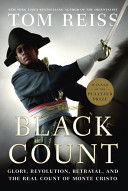
The Black Count by Tom Reiss
Then I struck literary gold in March when I read The Black Count: Glory, Revolution, Betrayal, and the Real Count of Monte Cristo by Tom Reiss. The book is long as hell, but it’s pretty interesting. I have to be honest and say that I really couldn’t keep track of the three generations of Dumas men here. The revelation that the person who inspired the classics of The Three Musketeers and The Count of Monte Cristo was actually a Black man of Haitian birth shouldn’t be all that shocking. I was most interested, however, in the changing racial and social landscape of France – a country that is notorious for pretending to be colorblind and for proclaiming that racism doesn’t exist there. The real value was reading of how powerful Blacks could ascend in 18th century France and how their equity slowly evaporated with time.
Then I spent the summer months reading some unrelated texts that were interesting in their own right, but more for professional or pleasure reading. I read Stanley McChristal’s My Share of the Task: A Memoir to understand better the man whose 2 decade long career was dethroned by an expose that only covered 2 weeks of his life. Then I read Pearl Cleage’s Things I Should Have Told My Daughter: Lies, Lessons & Love Affairs, which is really just a collection of diary entries by the author, thespian, feminist, educator & activist. It’s pretty funny.
I hit a dud in July with Amanda Kovattana‘s Diamonds in my Pocket, about a Thai-English woman who revisits the tensions of her biracial childhood. Her English mother and her Thai father meet, mate and marry, but their views never really seem to match. The premise sounds more interesting than the book actually reads.
Shiva Naipul’s North of South: An African Journey really helped me settle in to my new African life and to commit to my exploration of Asians in southern Africa. This author, the now deceased younger brother of V.S. Naipul, travels from Trinidad to Africa in search of very little other than experience. What comes off as a Brown backpacker’s tale from Kenya, Tanzania and Zambia of the 70’s continues to ring true for me here in Mozambique today. Some people seem to virulently dislike this travel journal and to critique the man who wrote it. It rings pretty true to me, so I’m not sure what that says about me. He definitely cut out all the paternalistic positivity, a la “we are the world” sentiment, people expect to hear from those who come to Africa. Unlike people who seem to dislike the book, he clearly didn’t come to (1) help the people *side eye*, (2) find himself *double side eye*, and/or (3) seek a backdrop for adventure *eye roll completely.* So…it is what it is. Every time I get in a car, I can only think of his words describing how Africans either drive “dangerously slow or dangerously fast.” So true, Shiva.
The week before my wedding, I laughed like hell reading Bill Cosby’s Fatherhood, but I don’t think it’s politically correct to say you like anything about the man right now. Too soon for praise, maybe? Moving on…

The Problem We All Live With by Norman Rockwell (1964)
Then I latched on to fellow Barnard alum Jane Allen Petrick’s Hidden in Plain Sight, a text about people of color in Norman Rockwell‘s paintings. She searches to find Rockwell subjects to understand just who these people were who were incorporated so subtly into his Americana classics. Clearly, the book is a labor of love, not necessary a wealth of information. But, the topic is interesting and Petrick’s appreciation of the human connection between Rockwell & the people he paid to pose really shines through.
Then I read some really shitty e-books, because they were free. So, steer clear of Motherhoodwinked (though for someone battling infertility, this may have some therapeutic value), The Path To Passive Income (I should have known when the author was “U, Val”), and Heather Graham’s blog series Why I Love New Orleans. Don’t bother…
Then just before Thanksgiving I honed in on South African writing with Nadine Gordimer‘s novel The House Gun and the biography of fellow Witsie Robert Sobukwe (Robert Sobukwe: How Can Man Die Better) by Benjamin Pogrund. Both were longer than necessary, though for vastly different reasons. Confronting violence and privilege in South Africa from vastly different angles, these two books are authored by and about writer-activists. Honestly, the back to back reading was a bit more valuable to me than each individually. I’ll spare you the summary, because I think you should read them yourselves.
I’ve already reviewed the trifecta of the year (V.S. Naipul, Ngozi Adichie, and James Weldon Johnson) in my recent blog post on code switching. So, I won’t revisit these.
And the book that left the greatest impression is a book I was very reluctant to read for a very long time. Emma Donoughue’s Room had been sitting in my house for years before I got the courage to read it and I’m so happy that I did. This novel is the story of a 5-year-old boy who has grown up living in one room, because he is the child of a kidnapping & rape victim. Held hostage his whole life, he doesn’t understand his captivity and struggles to cope once released. Heartwarming, gut wrenching, amusing and frighteningly light – this book is an amazing piece of fiction. I’d recommend it to anyone who loves someone.
 I expect that this year will be filled with books for my research, so I’m preparing for less fiction and more history. More Indians and Mozambicans and east African and southern African themes. I’m finally dropping the goal down to 40 books, so I can avoid the inclination to read crappy ebooks to hit a target. I’m going to save my life minutes for real stories that matter and for texts that have value.
Cheers to a more value dense 2015, filled with really awesome bookmarks!
 4. First of all, “Dilwale Dulhania le Jeyenge” stars my absolute fave Bollywood actress,
  existabovethenoise