54 Books beyond Bombay

Stack-Of-Books-BigThe year before last, I could only manage to read 48 books. Not even one book a week! #epicfailforanerd But this year, I was determined that I would finally read 52 books and Nikki would not beat me this time. Once again, I set her in my sights and she – clearly – didn’t even know it. Surely, I’d blow her book goals right out of the water. Right?

Wrong! Once again, Nikki is not even thinking about me! While I went above and beyond, tallying 54 books this year, she’s off dressing up her daughter as a lion and going on African safaris. Sometimes, she and her husband even stage a safari in their backyard and pose their costumed daughter as the lion cub that they’re spotting in the wild. I mean, it’s pretty darn cute. And creative.  Damn you Nikki! I can’t win with you…

Alas, in 2013 I spent most of my time researching Indian culture and folklore, so a lot of last year’s books were academic in nature and/or Indian in authorship. Not all, but most. So, without further ado or more Nikki acclaim, here are my top 5 books of 2013:

304072197_943f9c74d9

Maximum City Bombay Lost and Found is my favorite book of last year. And the irony here is that it was the very first book I read. So, it was downhill from there. But, talk about dissecting a city from its inside out! This book is a literary feat. It is a page turner that’s true to the city it preaches to know. There’s drama and sex and love and violence – all representative of a city that’s meant so much to me. I can’t recommend this book enough for those of us who have been to and enjoyed today’s Mumbai.

shantaramShantaram is Maximum City’s whorish twin sister, in book terms of course. It’s the tale of an escaped convict from Australia making his way in the Mumbai underworld. It speaks of the Nigerians and Afghanis. Drug dealers in plain sight at Cafe Mondegar. And foreigners with fake passports and friends in rat infested slums. The author claims the story is all fiction, but it’s rumored to be a memoir. I can’t imagine how anyone could make up 963 pages of this stuff without some serious life experience for inspiration.


b3ceb9f2-3efa-4cc9-94f2-651e00d30eb9

The Twelve Tribes of Hattie is the unsung story of Black motherhood – its efforts and short comings. The stories touched me on a personal level, as I felt familiar with the post-Great Migration characters and the inner city family drama. I don’t say that lightly though, because in my opinion contemporary Black protagonists often come off as overdramatized caricatures or underwhelmingly kitsch. Let’s be honest, we’re living in Tyler Perry’s wake. These historically accurate representations through Ayana Mathis’ words are long overdue, however.

 

Unknown

The Lonely Londoners is a short and easy read, but rich with texture and spirited characters. I came across it when researching the Indian Diaspora in literature. I read it not really expecting what I found. The author explores the recent immigrant experience in London, but not only from the Indian perspective. In fact, it’s primary characters are Caribbean immigrants. Like Mathis’ depiction, Sam Selvon gives short snippets of just how hard life can be for people who are trying really hard to make a dollar out of fifteen cents. Its characters are in a silent struggle, not in vocal rebellion. This read left me with a softer heart.
facesinthewater

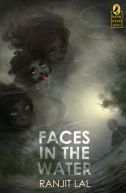
Faces in the Water is where magical realism meets the unfortunate reality of female infanticide in contemporary India. The premise is that a little boy spends a summer at his family’s ancestral farm and discovers the water well that supplies the home. In it, he sees faces – female faces. More than one. You’d have to read the book to figure out who these girls are and how he resolves knowing how they got there. I loved this book not just because it tackles an issue that most people won’t even acknowledge, but it highlights that it’s not a practice that only occurs among the poor. And, more importantly, it empowers a male character – a young boy – to take action against injustice, to be a women’s rights activist, to be a better man than his own father.

2013 dud reads:

The Emperor’s Children by Claire Messud: Where to begin? Maybe I’m just sad that this book is a book. It’s about a bunch of rich New Yorkers making asses of themselves and each other. It’s a New York reality – unfortunately – but the story doesn’t scream book worthy to me. And, I just found out that the author is a fellow alum of my high school, so I’m even more disappointed. The writing was convoluted and full of misplaced modifiers. If there’s one thing a Mustang can’t stand, it’s a misplaced modifier.

Arranged Love by Parul Mittal: Woe, the days of my life that I can’t get back! Maybe I need to have grown up on the Indian subcontinent to understand why this is supposed to be a love story, but this book is weird and lame. There are much better stories of arranged-come-love marriages. Read the Namesake and don’t waste your money or life minutes on this book!

Confession of a Buddhist Atheist by Stephen Batchelor: Some memoirs are just journal entries that people should later burn. This book is one. Buddhism isn’t a religion, so…. what’s this atheism schtick?  Hence, there are fundamental problems with this book and it’s premise. Sigh…

Ring Side: The story of my engagement ring

Wikipedia Rough DiamondI have never seen the movie “Blood Diamond” and I have never downplayed the diamond to sound less materialistic to men. I genuinely wasn’t interested in diamonds and I thought I had three very good reasons why: 1) I think the diamond industry is monopolistic to the point of being predatory all up, down and through it’s delivery chain. 2) I think the act of gifting diamonds is incredibly uncreative. 3) I think it’s just a goddamn rock. Suffice it to say that I have been avidly anti-diamond since my teenage years, but one year in India changed all that.

I was completely unprepared for the realities of the Indian diamond, gem and jewelry market, all of which made me rethink my previous thoughts. First, while the industry remains incredibly brutal, the industry’s pricing for Indian consumers is drastically less than it is for its Western consumers. The difference is dramatic; often the same quality stone (and often a lower quality gold setting) will cost an American two to three times as much in America than it costs an American in India. Imagine the price drop for an Indian in India. Maybe the delivery chain on that side of the Atlantic ocean isn’t as predatory? Second, when I buy diamonds for myself, that nullifies the creativity clause. Whatever I buy for myself is always incredibly fly. And, third, when the price of said rock becomes affordable, dare I say reasonable, then maybe I can remove the diminutive “just” from my thoughts and acknowledge, without judgment, that yes, it is a rock. A very pretty rock.

Well, it took me a full year to actually buy diamond jewelry for myself. The first purchase was gut wrenching. It was a Mughal style antique emerald and uncut diamond ring, set in what’s probably just aluminum foil. I was too much of a novice then to know that I should not have paid what I paid, but it was pretty and I thought that buying vintage was like recycling – no? No. It’s not and I wasn’t fooling anybody but myself with this shucking and jiving intended to distract from the fact that I was really making a fundamental change. Perhaps, I can only liken the jolt of my buying diamonds to what I imagine it would feel like for me – a pescatarian for 11 years – to eat land-animal meat again. Taking that step would mean that many boundaries, more ritual than moral, would be broken. I asked myself, “is there anything you won’t do?” (If I told you my answer, I’d have to kill you.)

Imagine my shock and awe when I fell in love with my engagement ring. To be clear, I fell in love with the ring AFTER I fell in love with the man. But, the ring and my reaction to it caught us all by surprise – me, my jeweler, and my fiancée. See, both my jeweler and my fiancée had heard my long rants about how I didn’t want a diamond wedding ring and how diamonds were so incredibly boring. I can still see my fiancée’s face now – his pockets disappointed, but his eyes gloated “gotcha now little miss goodie two shoes!” Yea well he got me, literally. Only my visiting friend – ever the touchstone of American stereotypes – reminded me that I was supposed to want a diamond ring. That, in fact, I should want an even larger one than the one I wanted and that I’d be a fool for thinking that now was the time for playing teenage anti-diamond activist.

Yet, for the three of us who looked like deer caught in headlights, the knockdown drag out battle between me and myself raged on for close to an hour. What did I stand for if I would cave now? Didn’t that violate thought #2? Hadn’t I broken all my rules when I bought my own diamond jewelry? Was I being a hypocrite? Did I set this man up to think he would really be able to marry me by proposing with a piece of ivory, when what I really wanted was bling? Wasn’t he stupid for believing me in the first place?

Maybe the answer to all these questions is ‘hell yes.’ All I know is that I walked out of that store an engaged woman and everybody was all smiles. The morally sound little girl inside of me awoke from her slumber, but then she stared into the glow from the pretty, shiny rocks on my left hand and she went to sleep dreamily happy.

I laid that little girl to rest peacefully in India and, gleefully, showed off the symbol of my being a taken woman. In India, people don’t typically get engaged with diamond rings. So, there’s no oohing and aahing over the jewels. They want to know why they haven’t yet received the wedding invitation, if I’m planning to have a nikah or if I want to wear bangles for a full year. In their minds, if the date isn’t set – then what’s the value of yapping about being engaged? Fair enough.

I have no answer for that wedding date question, but first things first! I had to come home to face the family and friends I left behind – those that wished me well and those that clearly couldn’t give a damn. There were the men of yesteryear that said, ‘yea, I saw your Facebook page. That’s him right?’ And my cousin who, 3 weeks after seeing me in person wearing my ring, said “Congrats girl! I just saw your ring in your pictures. You’re engaged, right?” We all knew this day would come, but oh how awkward and social media dependent it was.

Let me say, here more than ever I’ve had to go back to rethinking the ring. Let me just list a few of the questions I’ve gotten, “What kind of cut is that? Why did you get a band? How many carats is it? What’s the clarity? From India, really? He must really love you, huh?” I could go on, but I’m too tired to dig.  Obviously, nothing was ever meant with malice and a lot of the time people sounded more impressed with my ring than even I was. What’s come full circle, however, are the original questions I asked myself about what having, buying, wearing diamonds means to me.

My few self-purchased pieces are really just for show. They are not born from an act of love, or a symbol of ever-lasting commitment. They are not meant to be worn everyday and they are more an investment than adornment. But, my engagement ring – the very thing that binds this man’s heart to me despite the almost 8,000 miles that lay between us – is special. It shouldn’t be a challenge to some teenage rules I lived by to silently shame the De Beers and Oppenheimer families. It shouldn’t be a fall from moral grace. It shouldn’t be a topic of conversation or comparison. It shouldn’t be a symbol of self-doubt.

It should be transcendent. Symbolic of a new era. A time when I don’t owe anyone, but this man, an explanation for my actions, my choices, my happiness, and my glee. For all intents and purposes, this set of rocks is supposed to symbolize change, the forging of a new foundation with a partner. Perhaps, this is a choice that I can make while on this team that I never would have made alone. Dare I say, it never even occurred to me to make this choice when I was alone. As I think about it now, it never occurred to me even when I was previously in serious relationships. What my inner teenager would call being a sell out, feels a lot like being an adult to me now.  In other words, it sure feels like I know ‘he’s the one.’ He, being the man – not the ring.

So, like I said, until about two months ago I was avidly anti-diamond. As of today, I’m madly in love with a man who loves the woman I am today, the raging teenager he had to assuage to get to me and the sleeping little girl that he kisses on the forehead every night via Skype.  For all the things that this ring conjures up of my past and the road that led to that serendipitous trip to Mumbai in October, I am rendered speechless by all that it will mean in the days we have yet to see.

‘Til every last prong breaks, and every last diamond falls out – may we be bigger than our abstract thoughts and open to all the new challenges that this partnership will withstand. May we be strong and light. May we be a rock.

A very pretty rock.